Case study · Automotive / Analysis
NeonObservatory — from vehicle logs to traceable findings
A validation finding is useful when a reviewer can connect it to the expected behaviour and the recorded evidence. NeonObservatory brings those steps into a desktop analysis workflow.
The workflow problem
Vehicle-log investigations involve both the reference and the recorded behaviour. Moving between files, signal views and reporting documents can make it difficult to retain the context behind a finding. The product focuses on comparison, investigation and export in one analysis workflow.
My contribution
I defined the analysis workflow and traceability rules, worked through regression checks and verified macOS and Windows builds. The project connects my automotive validation experience with the requirements of a desktop tool that a reviewer can inspect.
- Compare reference data with vehicle logs
- Investigate signal behaviour
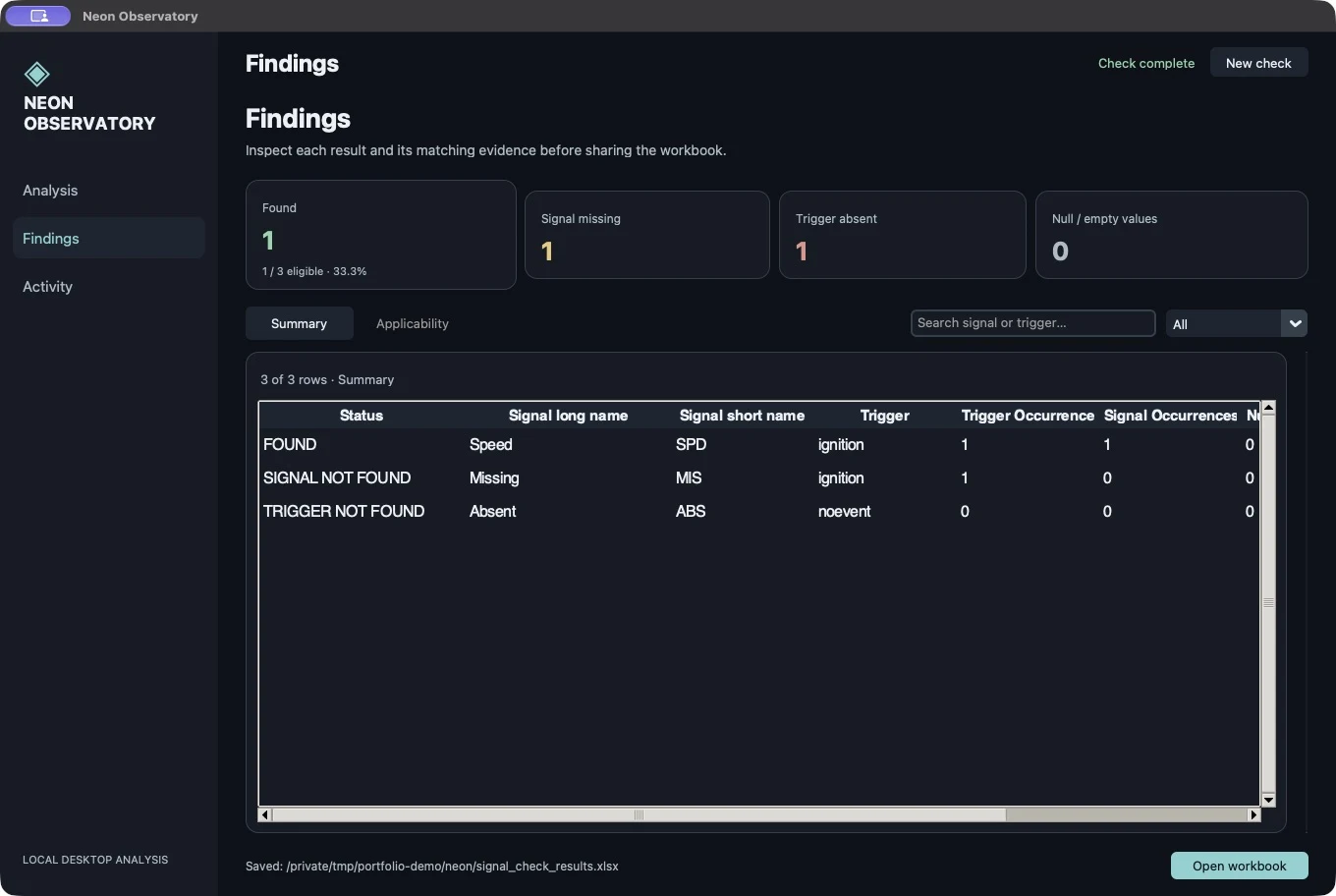
- Export findings into Excel reports
What is available
NeonObservatory is a Python desktop application with regression checks and macOS / Windows builds. The public repository provides source and project documentation. The image on this page is an application screenshot using synthetic signals and findings.
What this demonstrates
The project demonstrates product definition around a validation task, traceability thinking and verification of a desktop deliverable. The public evidence supports those capabilities; it does not establish a quantified reduction in validation time or an official deployment by an automotive employer.